



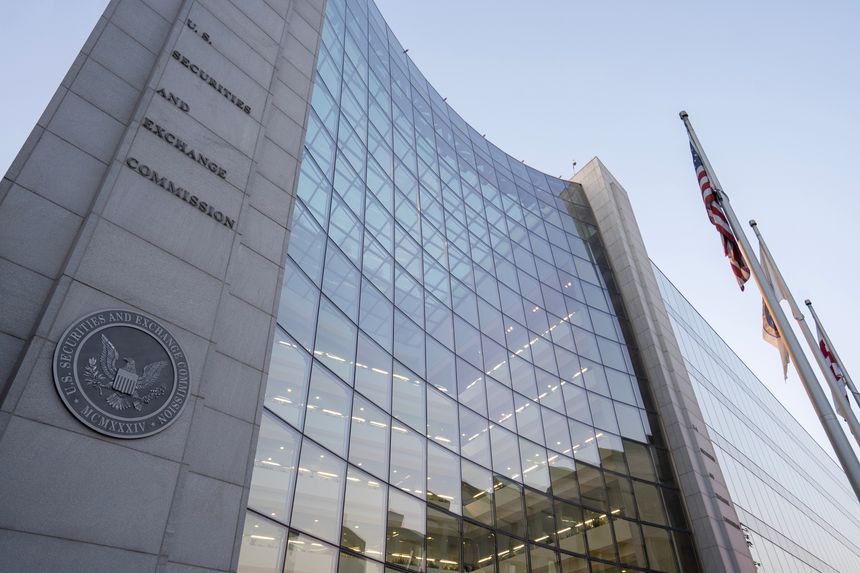

Last month, I wrote an article that the SEC had won the argument, and the jury was still out. On June 4, the U.S. Supreme Court delivered its answer in Sripetch v. SEC, No. 25-466, and it confirmed the headline prediction: the SEC does not have to prove anyone lost money to take away the profits of unlawful conduct.
But the result is the least interesting part of this opinion. The how matters more than the what — and the concurrence I flagged as likely didn't just show up. It came with a roadmap, a circuit split, and a $6.1 billion data point. If you advise a company that the SEC could ever investigate, the most important sentences in this decision are not in the majority. They're in Justice Thomas's solo concurrence, and they tell you where the next case is going.
What the Court Actually Held
The decision was unanimous, and Justice Gorsuch wrote it. The holding is narrow and clean: a showing of pecuniary loss to investors is not required before the SEC may obtain disgorgement.
The plain-English version is worth getting right, because it's counterintuitive. You can be a "victim" entitled to a wrongdoer's profits even if you are not out a single dollar. The court anchored this in centuries of equity practice, not in securities law. Its favorite illustration: a man opened a cave as a tourist attraction, part of it sat under his neighbor's land, and a court made him hand over a third of his profits — even though the neighbor couldn't reach the cave, never used it, and lost nothing. The wrong was the unauthorized use of someone else's protected interest. The remedy measured the wrongdoer's gain, not the victim's loss. As the court put it, a claimant can recover even where he suffered “no measurable loss whatsoever.”
For securities enforcement, that resolves the circuit split decisively in the SEC's favor and forecloses a defense that had real traction in the second circuit. A defendant can no longer escape a disgorgement demand by arguing that investor losses are too diffuse or too speculative to prove.
The First Surprise: How the Court Got There
Going into the decision, the consensus was that the court would ground its ruling in the 2021 amendments that added "disgorgement" to the SEC's statutory toolkit. That would have been the modern, securities-specific route.
The court didn't take it. In fact, it went out of its way not to. The majority expressly declined to decide whether the 2021 amendment changes the scope of the SEC's disgorgement power at all, choosing instead to "assume without deciding" that disgorgement remains an old-fashioned equitable remedy and ruling on that basis. It is the narrowest possible path to a win for the SEC.
That choice is not a technicality. By refusing to interpret the new statute, the court left two large questions wide open — including the one that decides whether defendants get a jury. The opinion answers the question presented and pointedly nothing more.
The Second Surprise: Gorsuch Built the Warning Into the Majority
At argument, Justice Gorsuch called the downstream consequences "pretty perilous." It would have been reasonable to expect him to resist a clean SEC win, or at least to write separately. Instead, he authored the majority — and folded the warning directly into it.
The majority drew a bright line that businesses should commit to memory. Equity tolerates disgorgement only so long as the money goes to wronged investors. The moment the SEC starts keeping disgorged funds for the Treasury as a de facto fine, it has, in the Court's words, stepped "beyond what Liu held [the statute] tolerates" — and that move "would invite other questions too." The opinion then cited SEC v. Jarkesy by name, the 2024 decision holding that when the SEC seeks penalties, the Seventh Amendment guarantees a jury trial.
In other words, the unanimous court told the SEC it won this case, and in the same breath told it exactly how to lose the next one.
The Confirmation: Thomas Wrote the Invitation
I predicted a concurrence exploring the Seventh Amendment that would, in effect, invite the next case. Justice Thomas delivered precisely that — and went further than "exploring." His position is direct: because Congress in 2021 pulled "disgorgement" out of the equity provision and gave it its own subsection and its own limitations periods, disgorgement is now a legal remedy, not an equitable one. And legal remedies come with a jury. As he wrote, "in a future case, we should recognize that disgorgement is now a legal remedy for which the Seventh Amendment requires a jury trial."
He didn't stop at theory. He supplied the vehicle. Thomas noted that the circuits have already split on whether statutory disgorgement is legal or equitable — the Fifth Circuit (SEC v. Hallam, 42 F. 4th 316, 327 (CA5 2022)) on one side, the Second Circuit (SEC v. Ahmed, 72 F. 4th 379, 395 (CA2 2023)) on the other — and wrote that the court "will soon need to address" the question. That is about as clear a signal as a justice can send that a cert-worthy case is coming.
And he made the policy case concrete with the number that should get every general counsel's attention: in 2024, the SEC obtained orders to disgorge $6.1 billion but returned only $345 million to victims. When more than 90% of disgorged money never reaches an investor, Thomas argued, the program looks less like equity returning ill-gotten gains and more like a fines regime — the very thing Jarkesy says requires a jury.
The Takeaway Most Readers Will Miss
Here is the part that turns this opinion into something operational rather than academic.
The variable that now decides whether an SEC disgorgement demand is jury-proof is not a legal label. It is a fact pattern in your own matter: does the SEC actually have a feasible plan to distribute the money to identifiable victims, or is it headed to the Treasury?
The court built that trigger into the holding. Money that flows to wronged investors stays in equity — no jury, the SEC's familiar fast track. Money the SEC keeps starts to look like a penalty—and a penalty pulls Jarkesy and the jury right into play. The distribution question, which used to be an afterthought handled long after the litigation ended, is now the hinge on which the entire procedural posture — and a good deal of settlement leverage — turns.
What Companies and In-House Counsel Should Do Now
Recalculate exposure on the real measure. Disgorgement is gross profit with no offset for your costs. The number is almost always larger than a fine analysis would suggest. If you ran that math before yesterday assuming a pecuniary-harm defense, run it again without one.
Press the distribution question early and on the record. In any SEC matter, ask: Is there an identified victim class? Is there a feasible plan to get the money to them? If the answer is "the funds go to the Treasury," you may be looking at a penalty in equity's clothing — and that is your opening to argue for a jury under Jarkesy. After Sripetch, that question carries constitutional weight, not just optics.
Treat the Hallam–Ahmed split as the next case. Thomas told you where the court is looking. Counsel should track post-Sripetch litigation teeing up the legal-versus-equitable question directly, and be ready to advise on how a jury-trial right would reset the cost-benefit calculus of fighting versus settling.
Build the jury possibility into settlement timing. If a future ruling makes disgorgement jury-triable, the SEC's structural advantages — its forum, its timeline, its specialist bench audience — soften considerably. A six-week jury trial with an uncertain outcome is a very different alternative than a bench proceeding. That shift is not here yet, but it is close enough to factor into matters you're negotiating today.
To be precise about Sripetch itself: the SEC won, cleanly and unanimously, on the only question the court agreed to decide. But the court declined the broader statutory ruling everyone expected, the majority planted a Jarkesy flag, and a justice published a roadmap to the constitutional fight with a circuit split already attached. The "perilous" concern from oral argument is no longer hypothetical. It has a sponsor and a docket waiting for the right case.
Stay tuned.
/Passle/673b7187983090b59d166389/SearchServiceImages/2026-10-16-15-27-02-348-6ad24246de6b66bfe10f7102.jpg)
/Passle/673b7187983090b59d166389/SearchServiceImages/2026-10-16-14-49-33-229-6ad2397db378b0c78cecdc34.jpg)
/Passle/673b7187983090b59d166389/SearchServiceImages/2026-09-15-13-34-37-479-6aa9496dc429248dfcfa54b6.jpg)
/Passle/673b7187983090b59d166389/SearchServiceImages/2026-09-04-17-45-45-749-6a9b03c99a3310b0baa541b7.jpg)