



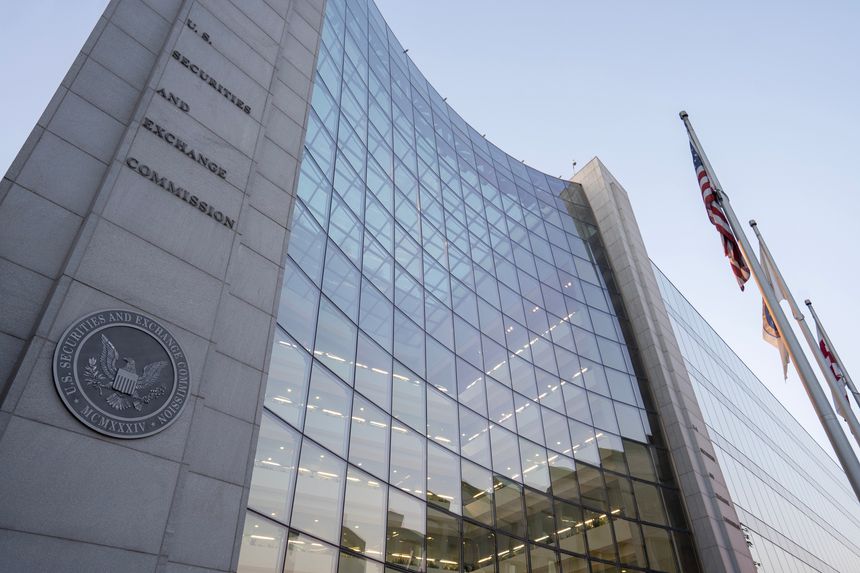

A case most businesses have never heard of is about to change the financial calculus of every company regulated by the SEC. When the Supreme Court rules in Sripetch v. SEC, it will answer one of the most consequential questions in SEC enforcement: can the government take every dollar of profit from unlawful conduct, even when no one can show they lost money?
Based on what happened at oral argument last month, the answer is almost certainly yes.
What Is Disgorgement—and Why Does It Matter More Than a Fine?
Fines are clear—you break a rule, you pay a penalty set by statute. The amount is predictable, capped, and separate from any profit you may have earned. Disgorgement is different. Disgorgement takes away the profit generated from unlawful conduct—with no statutory cap and no offset for expenses. The measure of disgorgement is your gain, not your victim’s loss. The numbers make the stakes unmistakable. More than half of the $2.7 billion in monetary remedies the SEC obtained in fiscal year 2025 came in the form of disgorgement. Disgorgement is not a secondary enforcement tool. It is the primary one.
The Case
Ongkaruck Sripetch ran a pump-and-dump penny stock scheme. He pleaded guilty and faced a civil SEC action demanding $2.25 million in disgorgement plus more than $1 million in prejudgment interest. His argument to the Supreme Court: Section 21(d)(3) of the Exchange Act prohibits the SEC from taking profits without proving that specific investors lost money.
The legal question is real. There is a genuine circuit split:
- The Second Circuit – Requires proof of pecuniary harm
- In SEC v. Govil, 86 F.4th 89 (2d Cir. 2023), the court read Liu v. SEC, 591 U.S. 71 (2020)’s conclusion that equitable disgorgement “is awarded for victims” to mean that a victim is someone who suffered a financial loss.
- The First Circuit – No proof of pecuniary harm required
- In SEC v. Navellier & Associates, Inc., 108 F.4th 19 (1st Cir. 2024), the First Circuit reached the opposite conclusion.
- The Ninth Circuit – Same as the First Circuit
- The Ninth Circuit decided Sripetch’s case and aligned itself with the First Circuit.
- The Fifth Circuit – No proof of pecuniary harm required
- In SEC v. Hallam, 43 F.4th 316 (5th Cir. 2022), the court found that disgorgement post-2021 statutory amendments to the Exchange Act superseded Liu and found no pecuniary harm was required.
What the Justices Said in Sripetch
Several justices’ questions signaled an inclination to rule for the SEC. Justice Barrett appeared to reject Sripetch’s argument that, absent a showing of pecuniary harm, disgorgement becomes a penalty, asking why that would be the case when “all you're taking away is the ill-gotten gains[.]” Her question treated the penalty/disgorgement distinction as resolved by the nature of the remedy rather than by its procedural posture — if the government is only taking back what you wrongfully kept, the punitive character never attaches. Justice Ketanji Brown Jackson commented that she “didn't see any case… that suggests that pecuniary harm was a requirement traditionally” for disgorgement. The thrust of the questioning was clear: disgorgement simply strips a wrongdoer of profits they were never entitled to keep, making it difficult to characterize as punishment requiring proof of victim harm.
Be Careful What You Wish For — A Forward-Looking Constitutional Risk
Justices Thomas, Jackson, Barrett, Sotomayor, and Gorsuch at various points implied support for the SEC’s position on the core question (i.e., Section 21(d)(3) of the Exchange Act does not require a showing of pecuniary harm to pursue disgorgement), while Justices Gorsuch and Roberts simultaneously expressed concern about the downstream constitutional consequences of untethering disgorgement from victim compensation. Both justices raised the Court’s prior ruling in SEC v. Jarkesy (2024). In Jarkesy, the Court held that civil penalty demands trigger the Seventh Amendment jury trial right. Justice Gorsuch characterized the issue as “pretty perilous.”
Historically, SEC civil enforcement proceedings have been conducted either in federal district court before a judge or in the SEC’s own administrative proceedings before an administrative law judge — neither involving a jury. The constitutional basis was that disgorgement and injunctive relief are “equitable” remedies, and the Seventh Amendment right to a jury trial applies only to claims “at common law” — meaning legal, not equitable, proceedings. The SEC has thus had two tracks: sue for disgorgement (no jury), or seek civil penalties (jury potentially required). A concurring opinion in Sripetch exploring the Seventh Amendment — without resolving it — would not be surprising and would effectively invite the next case.
The Court is unlikely to reach the Seventh Amendment question in Sripetch. But if, in a future case, the Court holds that non-compensatory disgorgement triggers the Seventh Amendment jury trial right, the SEC’s enforcement model would face a structural disruption it has never experienced. Every SEC civil enforcement case seeking disgorgement would become jury-triable — not a minor procedural adjustment. Jury trials require: live witnesses, cross-examination, evidentiary rulings, opening and closing arguments, jury instructions, and deliberations. A typical SEC enforcement case resolved in an administrative proceeding or through a consent decree can move from investigation to resolution in a fraction of the time and cost of a full jury trial. Add a jury, and the timeline extends dramatically, costs increase for both sides, and the outcome becomes genuinely uncertain in a way that a bench proceeding does not.
The Takeaways
For the SEC: Enforcement staff would need to assess whether a case is jury-proof before bringing it. Many SEC cases involve complex financial instruments, diffuse harm, statistical modeling of damages, and highly technical expert testimony. That means the SEC would become more selective — bringing only cases it is confident it can explain to 12 lay people. The practical result: fewer enforcement actions but higher-profile ones.
For defendants: The calculus inverts. Today, a defendant facing an SEC disgorgement demand of several million dollars has limited leverage. The SEC controls the administrative forum, the timeline, and the evidentiary framework. A jury trial right gives defendants something they currently lack in disgorgement cases — genuine litigation leverage. The threat of a jury trial is itself a negotiating tool. Settlements might look different if the alternative is not a bench proceeding before a specialist judge, but a six-week jury trial with uncertain results.
To be precise about the Sripetch ruling itself: the most likely outcome is a statutory ruling in which the SEC wins on the pecuniary harm question based on the 2021 Exchange Act amendments, but that very victory may summon the “perilous” constitutional consequences the SEC was trying to avoid.
What Companies Should Do Now
Regulated companies and their counsel should not wait for the Seventh Amendment question to be squarely presented. Several steps are prudent now:
- Reassess disgorgement exposure. Audit existing conduct and pending matters to quantify potential disgorgement liability. Because disgorgement is measured by gross profit with no offset for expenses, the exposure figure may be substantially larger than a statutory fine analysis would suggest.
- Revisit settlement strategy. If a jury trial right attaches to disgorgement claims in a future ruling, the leverage dynamics in SEC negotiations will shift. Companies currently in discussions with the SEC (or anticipating an investigation) should factor this possibility into their settlement calculus.
- Monitor for the next case. A concurring opinion in Sripetch addressing the Seventh Amendment would be a strong signal that a cert-worthy case is coming. Counsel should track post-Sripetch litigation in the circuits for cases that tee up the constitutional question directly and be prepared to advise on how a jury trial right would change the cost-benefit analysis of contesting an SEC enforcement action versus settling.
Stay tuned.
/Passle/673b7187983090b59d166389/SearchServiceImages/2026-09-15-13-34-37-479-6aa9496dc429248dfcfa54b6.jpg)
/Passle/673b7187983090b59d166389/SearchServiceImages/2026-09-04-17-45-45-749-6a9b03c99a3310b0baa541b7.jpg)
/Passle/673b7187983090b59d166389/SearchServiceImages/2026-07-28-17-07-33-102-6a68e1d52f7f4abc6245626e.jpg)
/Passle/673b7187983090b59d166389/SearchServiceImages/2026-07-24-16-53-59-177-6a6398a7a0012819d1715c18.jpg)